
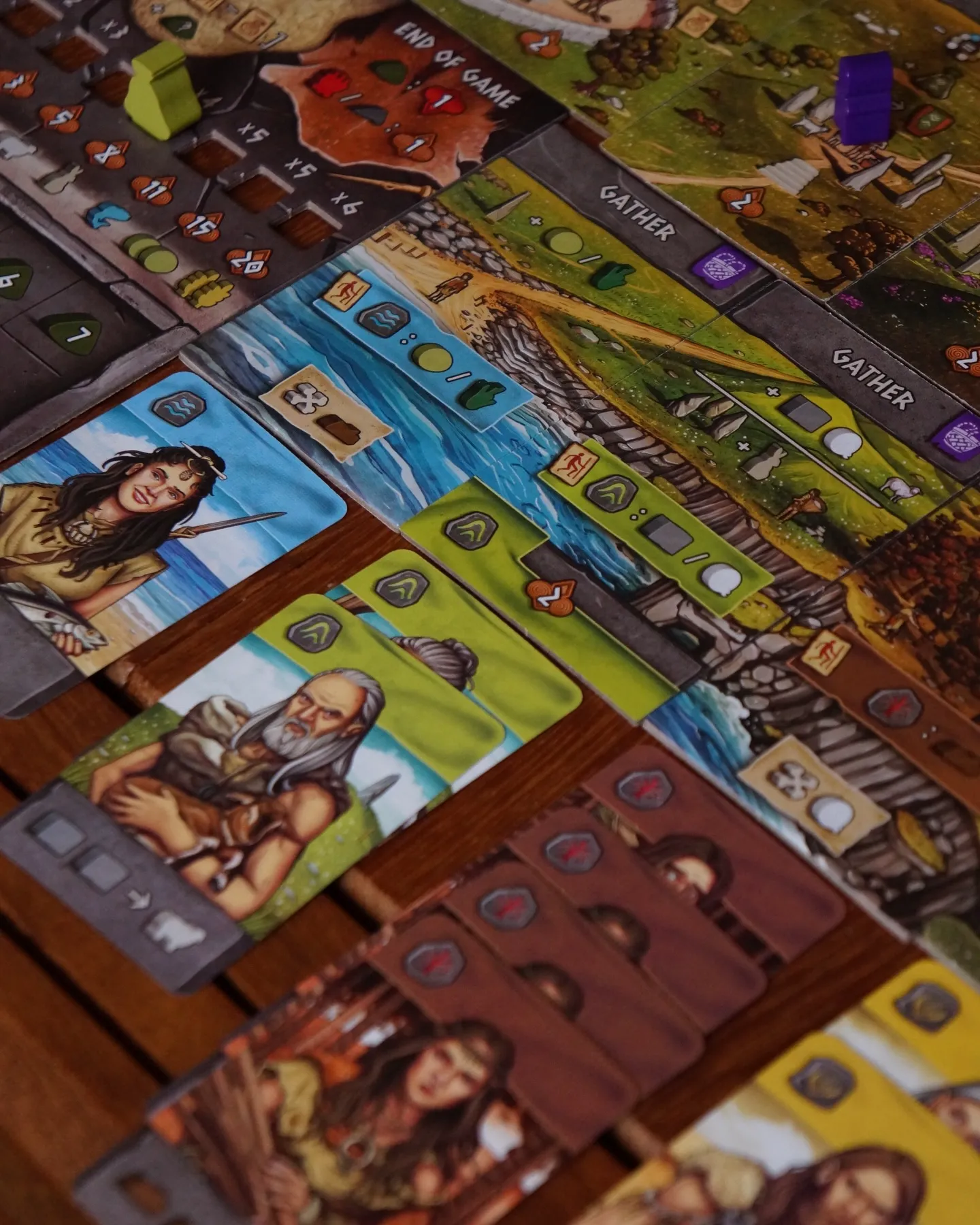
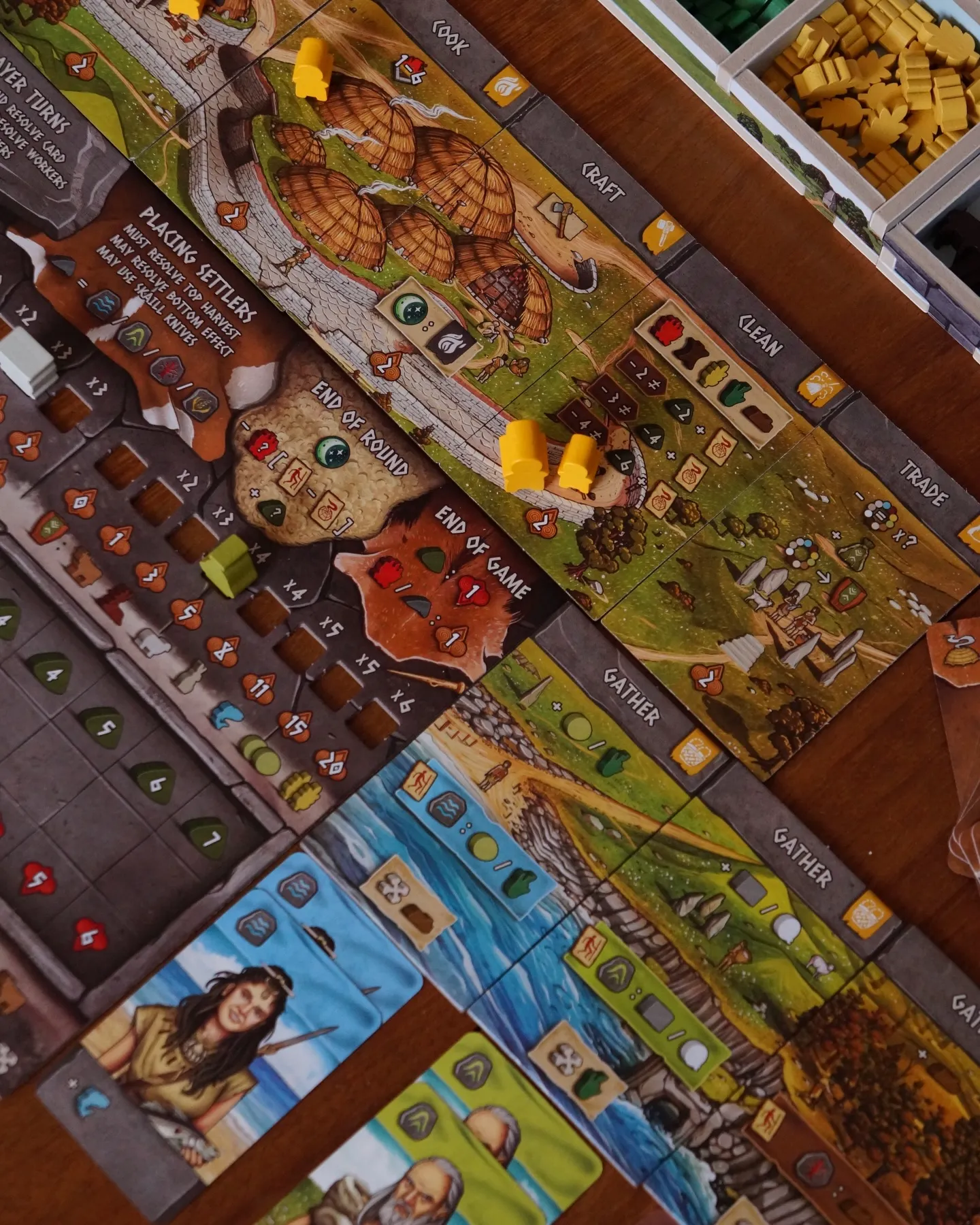
Stones, Spoons, and Stone Age Muck -a board game review
After absolutely loving Assyria (Second Edition) by Garphill Games, I immediately went out and purchased a copy of Skara Brae. Hearing it described as a “multiplayer solitaire” experience originally put me off a bit, but I have to admit I was entirely wrong to hesitate.
I went into the session mentally prepping to spend every last one of my spoons just to learn the systems, but it turned out to be completely different from what I expected. I was anticipating a heavy, exhausting grind, but the reality is much more like a super tense game of inventory Tetris, wrapped up in a wonderfully smooth and compact rulebook.
The Midden System: How It Plays
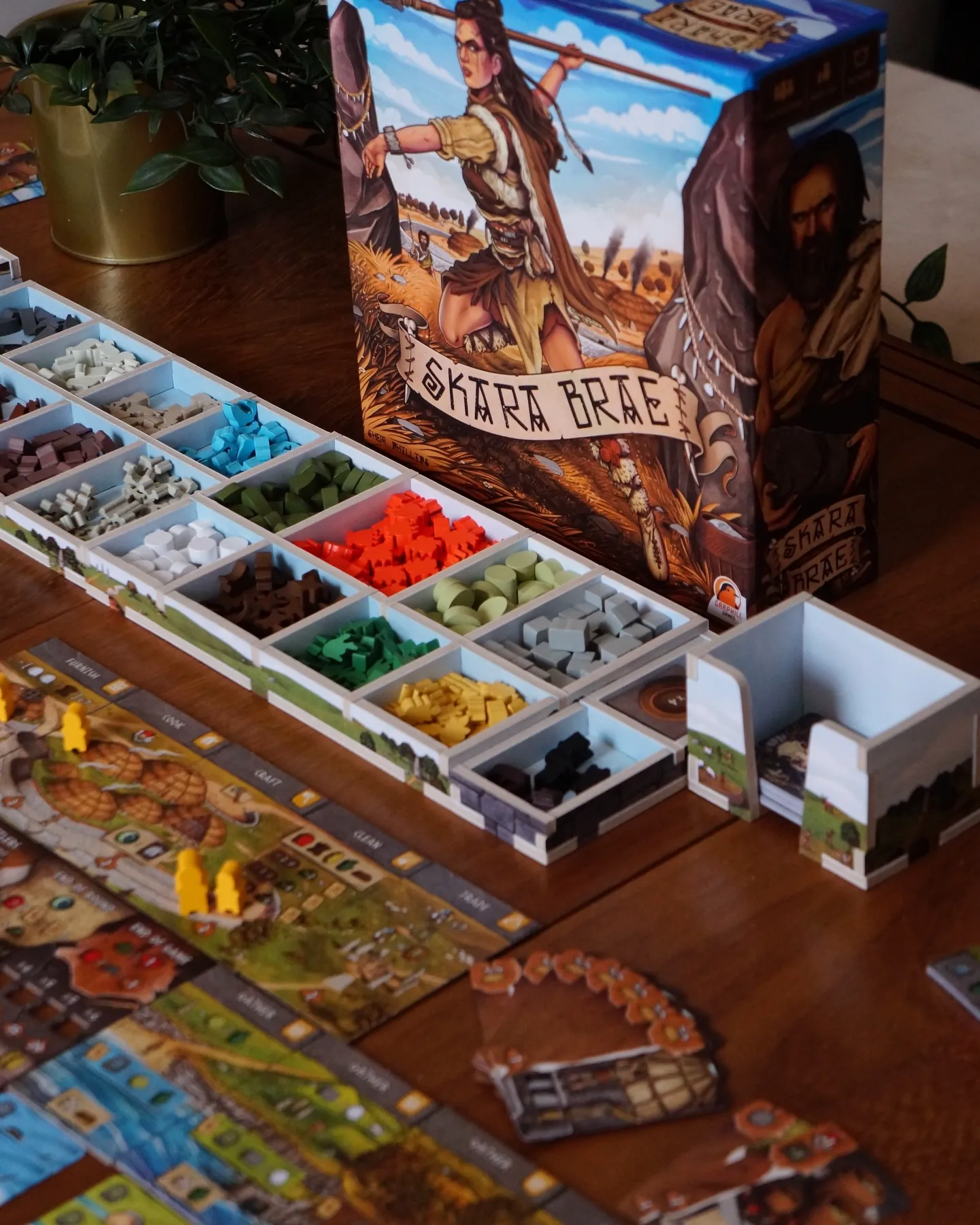
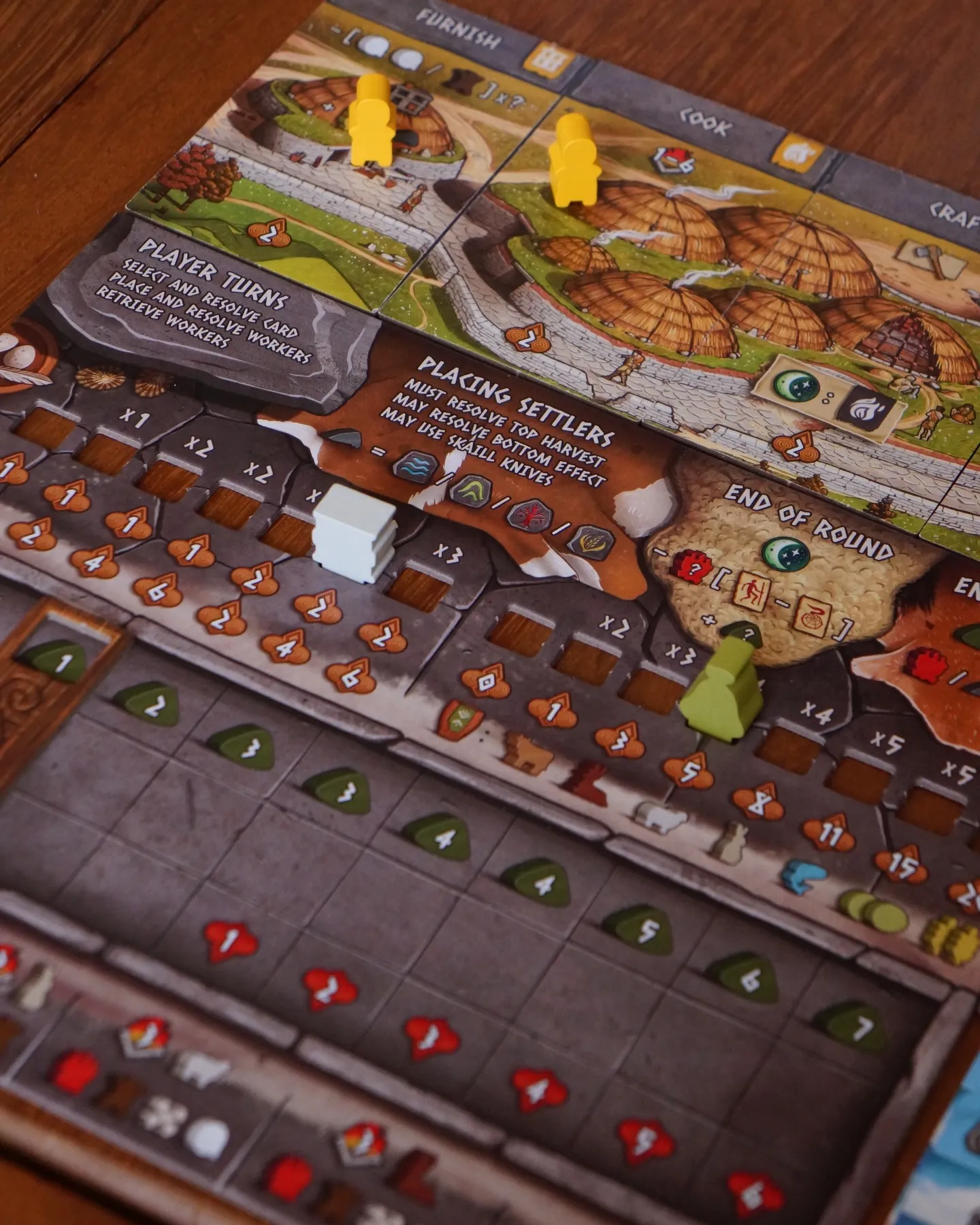
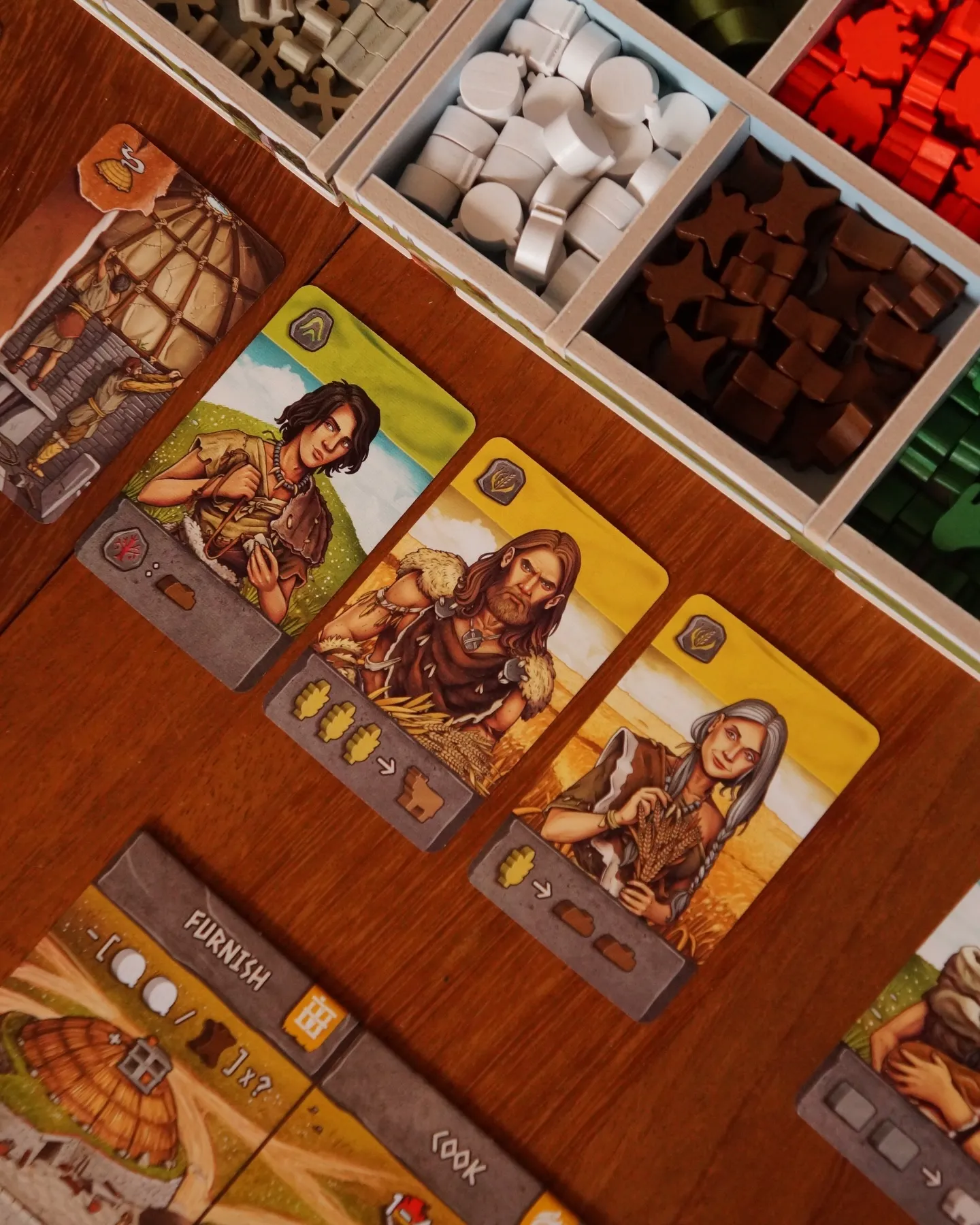
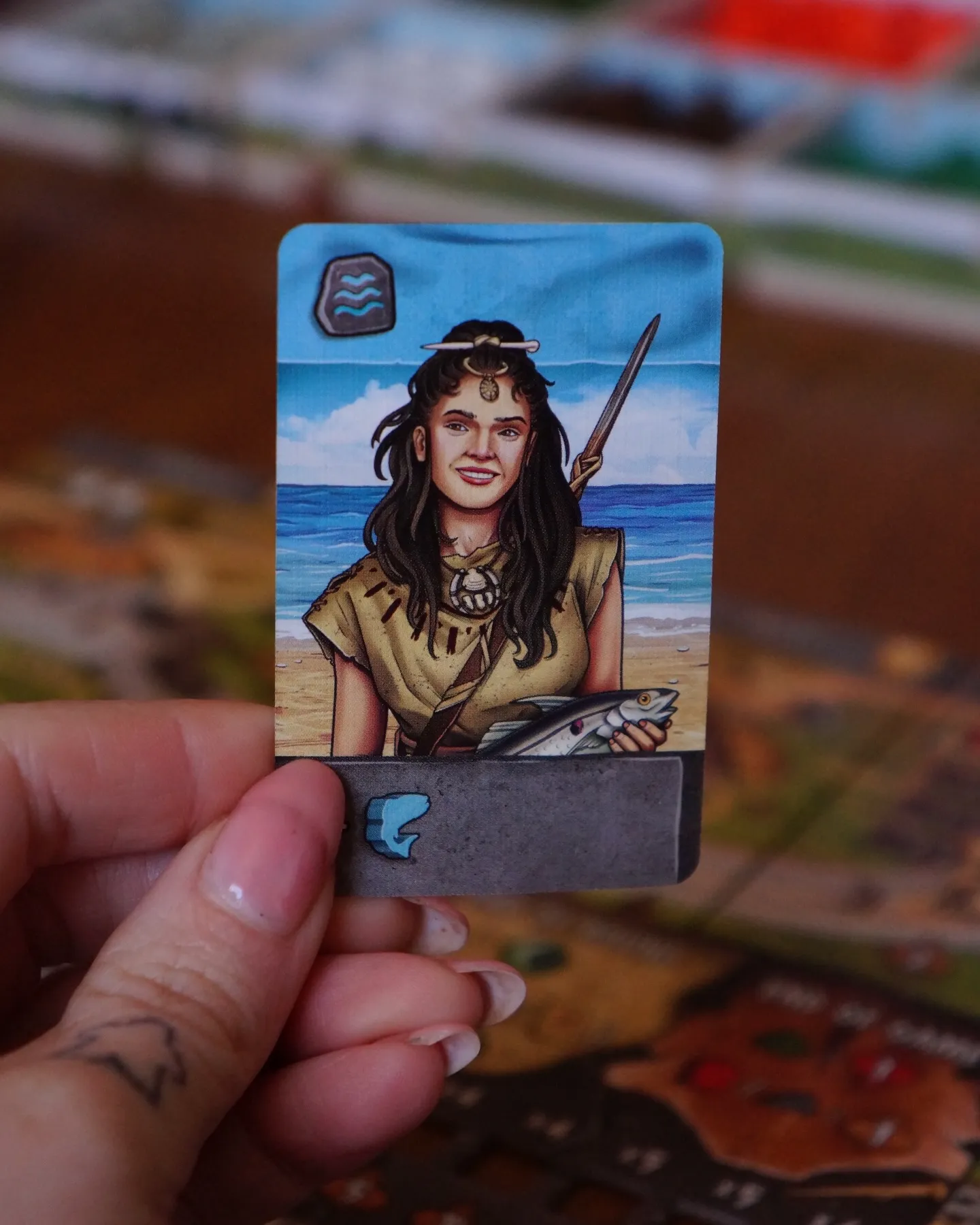
The actual turn structure is incredibly snappy. On your turn, you are essentially drafting a card to add to your prehistoric village and then placing a worker to gather resources. The real stress and mechanical fun, however, lives entirely within the Midden system.
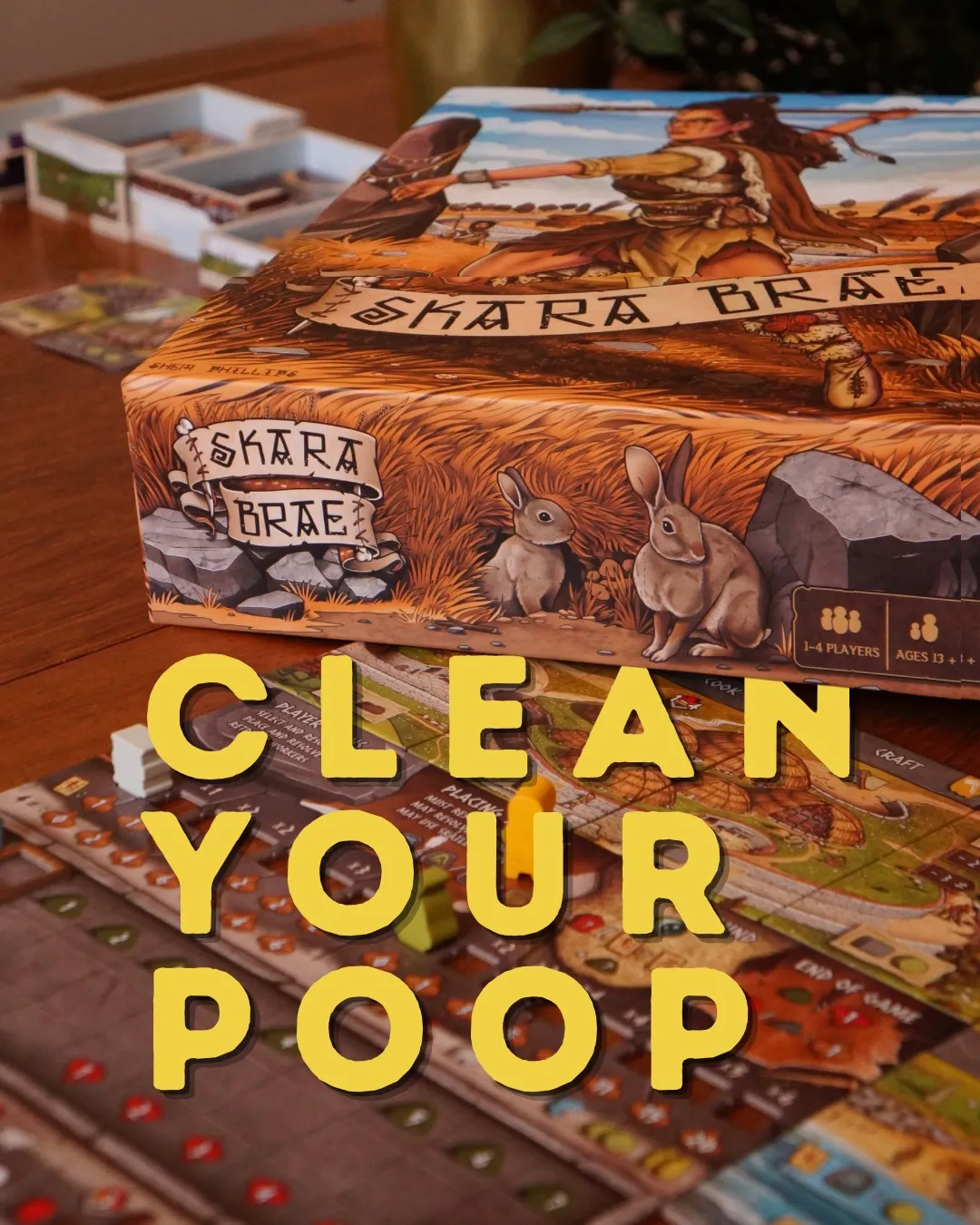
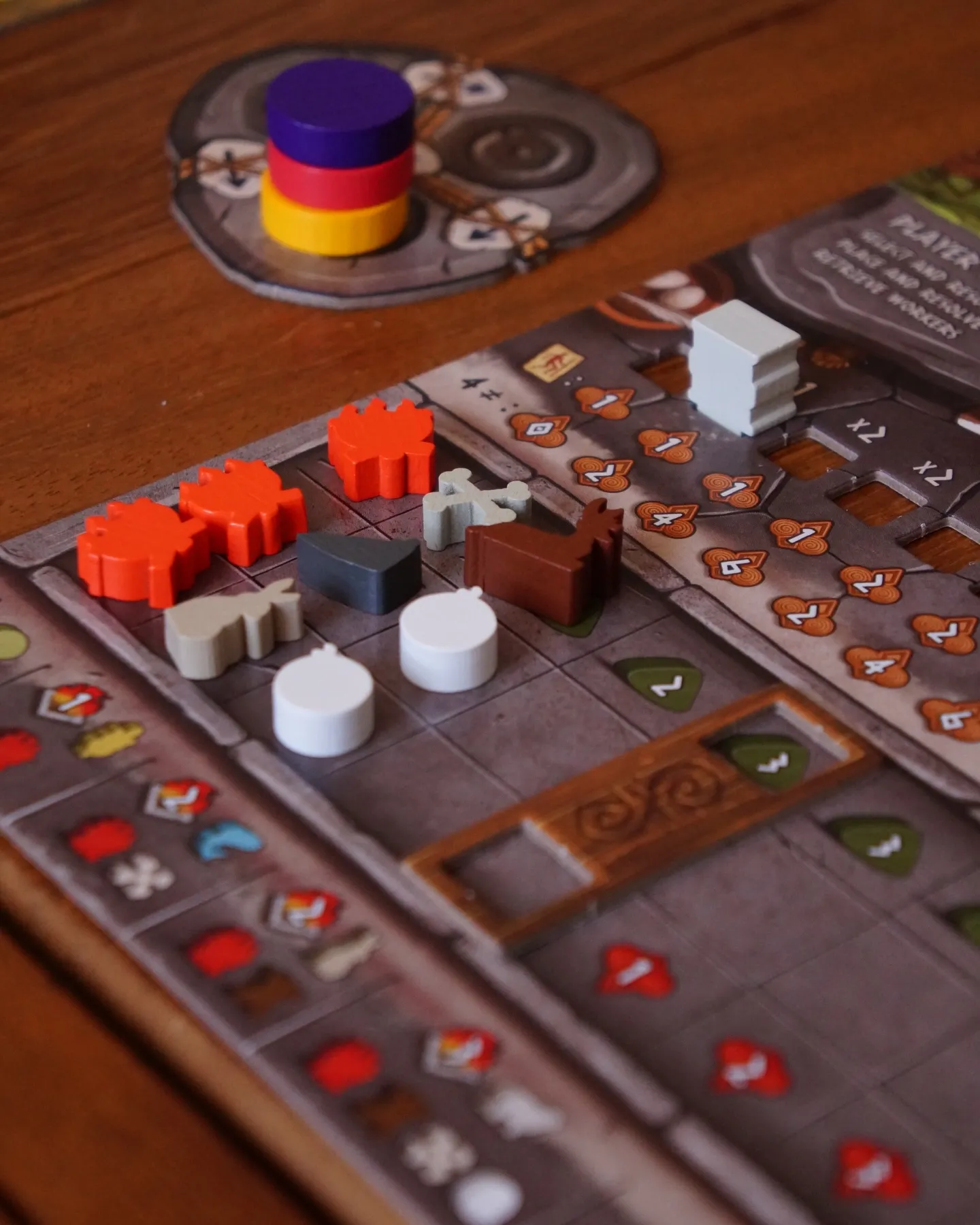
Your resource storage space operates on a sliding scale. If you hoard too many items for too long, they literally turn into waste, sitting on your board as negative points for the end of the game. This forces you to actually spend your wood and stone to build structures or cook food, rather than letting them sit in a pile. It is the ultimate minimalist living simulator from 3000 BC. For a natural board game hoarder like me, accepting this mechanic took a hot minute.
On top of managing your waste, you are also under constant pressure to either feed or shelter your villagers. Keeping them happy is essential, as your villagers are the key to building up a proper engine that lets you gather even better goodies as the rounds progress.
The Two-Player Verdict
We played Skara Brae as a duo, and the flow is surprisingly smooth. Because the card pool is naturally smaller at this count, you can see exactly what your partner is working toward on their side of the table. This opens the door for some classic, passive aggressive hate drafting energy – the kind of moments where you think, “I don’t actually need this roof card, but I know you desperately do.”
At two players, a full session wraps up in about 45 minutes. It is the perfect length for when you want a meaningful tactical puzzle but don’t want to lose your entire evening to a massive setup and teardown process.
The Spoon Rating: Low to Mid Spoon 🥄
The onboarding is exceptionally gentle. You start the game with only a single worker, which drastically limits your initial choices so you aren’t overwhelmed by twenty different options right out of the gate.
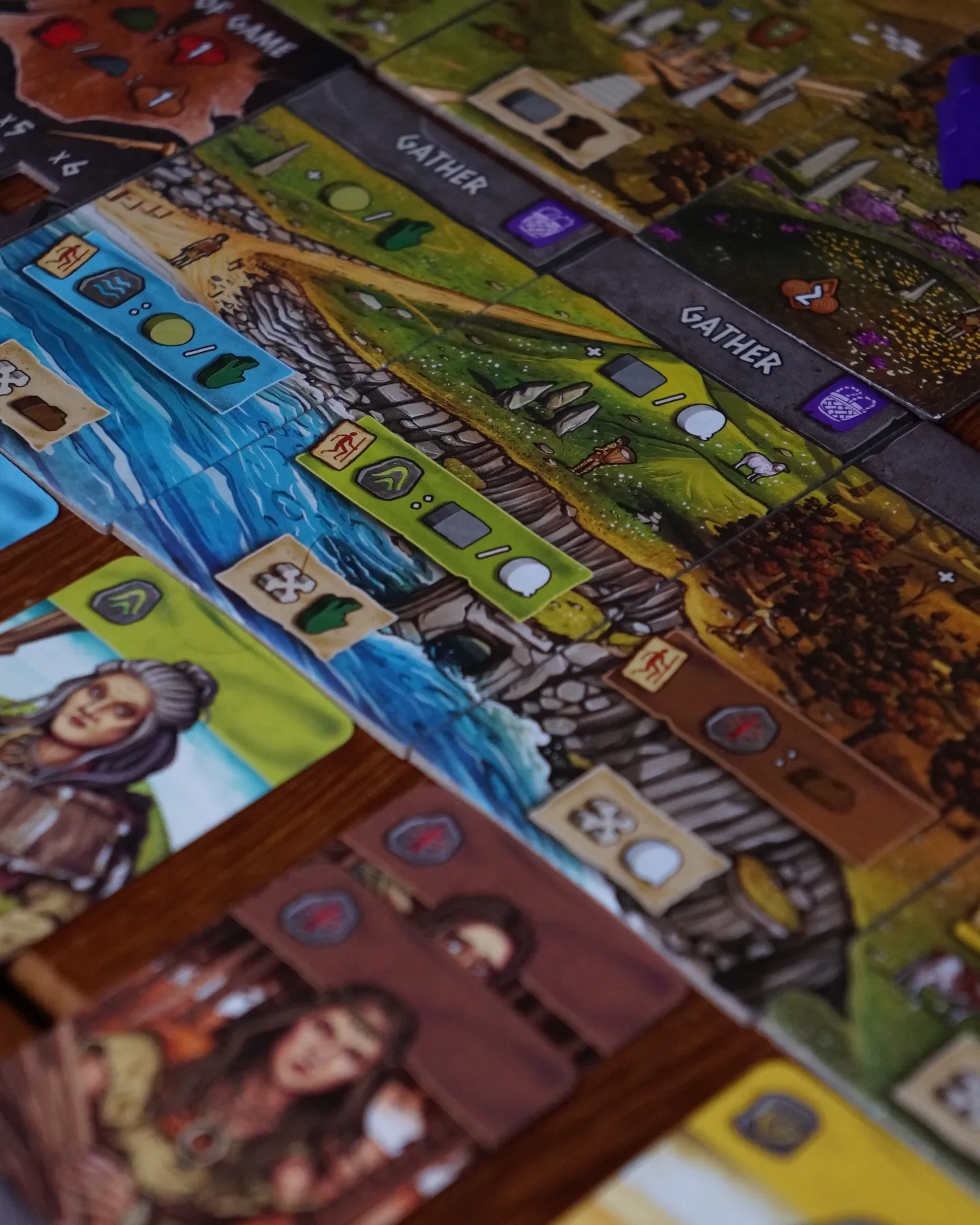
The iconography is clear and makes intuitive sense almost immediately, meaning your brain doesn’t have to work overtime constantly translating strange symbols. While a little bit of analysis paralysis is bound to happen toward the final rounds as you maximize your scoring, there isn’t a heavy memory load or complex math to flex.
Final Thoughts
If you find yourself with about half a jar of spoons left after a long day and want a game that feels delightfully crunchy without requiring a three-hour hyper-focus session, Skara Brae hits the spot beautifully. It is incredibly satisfying to turn a humble pile of shells into a functioning Stone Age settlement without melting your brain.
As a massive bonus, this is easily the only Garphill Games title I would genuinely consider playing as a solo experience. That is high praise indeed.
Purchased at retail. As always, all opinions expressed are entirely our own.